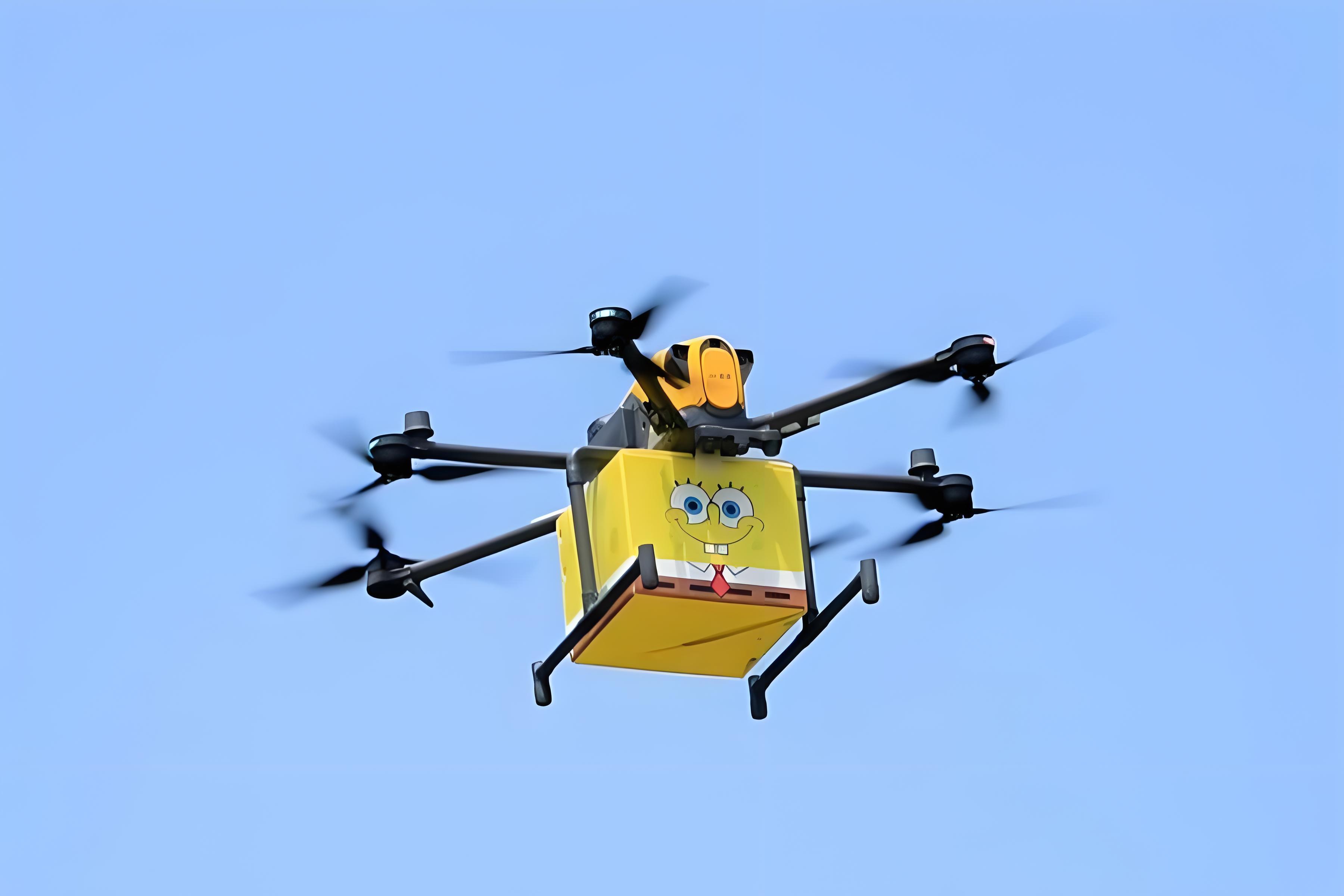

The global drone industry is evolving far beyond recreational flying and aerial photography. Today, industrial UAVs are becoming essential tools in agriculture, logistics, construction, emergency rescue, energy inspection, and infrastructure management. Among all industrial drone categories, heavy lift drones capable of carrying 10kg–30kg payloads are seeing especially rapid growth due to their ability to transport larger equipment, improve operational efficiency, and reduce labor costs.
The global drone industry is evolving far beyond recreational flying and aerial photography. Today, industrial UAVs are becoming essential tools in agriculture, logistics, construction, emergency rescue, energy inspection, and infrastructure management. Among all industrial drone categories, heavy lift drones capable of carrying 10kg–30kg payloads are seeing especially rapid growth due to their ability to transport larger equipment, improve operational efficiency, and reduce labor costs.
However, the true performance of a heavy lift drone depends heavily on one critical component: the UAV motor. A properly designed brushless motor system directly determines payload capacity, flight stability, power efficiency, endurance, and operational safety. Choosing the right UAV motor is therefore one of the most important steps when designing or upgrading a heavy lift drone platform.
This article explains why 10kg–30kg payload drones are becoming increasingly popular, what types of UAVs use these payload ranges, how UAV motors generate lifting capability, and how to select the best motor for heavy lift drone applications.
Many industries are facing rising labor costs and increasing pressure to improve operational efficiency. Heavy lift drones provide a practical solution by automating transportation, inspection, and aerial operations that previously required significant manpower or expensive machinery.
In agriculture, drones carrying large liquid tanks can spray crops much faster than manual labor. In logistics, drones can transport supplies to remote mountains, offshore platforms, or disaster zones. In construction, UAVs can carry tools and perform aerial monitoring simultaneously. These applications are accelerating global demand for larger and more capable UAV platforms.
Compared with small consumer drones, 10kg–30kg payload UAVs can carry significantly larger equipment and materials in a single flight. This improves efficiency while reducing the number of missions required.
Common payloads include:
Agricultural chemicals
Fertilizer spreading systems
LiDAR mapping equipment
Industrial cameras
Medical supplies
Emergency rescue kits
Communication devices
Inspection sensors
In difficult environments such as mountains, forests, islands, mining sites, and offshore facilities, heavy lift drones often provide faster and more economical transportation than traditional vehicles.
Traditional helicopters have long been used for industrial aerial operations, but they involve extremely high operational costs, fuel consumption, pilot expenses, and maintenance requirements. Heavy lift drones provide a much more affordable alternative for many low-altitude tasks.
| Aircraft Type | Operating Cost | Flexibility | Maintenance |
|---|---|---|---|
| Helicopter | Very High | Medium | Complex |
| Heavy Lift UAV | Lower | Very High | Easier |
Electric UAV systems also produce lower noise levels and zero direct emissions, making them more suitable for modern smart city and environmentally friendly operations.
The rapid development of high-performance brushless motors has been one of the key reasons why heavy lift drones are now commercially viable.
Modern UAV propulsion systems now include:
High torque brushless outrunner motors
Large carbon fiber propellers
High-voltage battery systems
Intelligent ESC systems
Advanced cooling structures
These technologies allow drones to generate stronger thrust while maintaining higher efficiency and better flight stability.
Modern heavy lift drones are equipped with increasingly intelligent flight systems that improve safety and reliability during complex missions.
Key technologies include:
GPS positioning
RTK navigation
AI-assisted flight control
Obstacle avoidance
Autonomous route planning
Real-time telemetry systems
These systems allow large drones carrying valuable payloads to operate safely even in challenging environments.
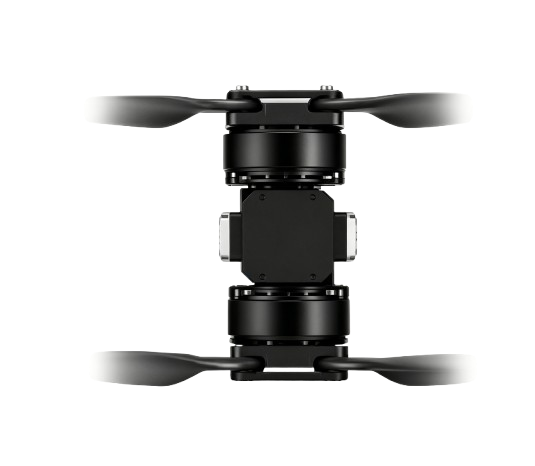
Agricultural drones are among the most widely used heavy lift UAVs today. These drones typically carry liquid spraying systems, seed spreading devices, or fertilizer payloads ranging from 10kg to over 30kg.
Because agricultural operations often require long flight times and high reliability, the motors used in these drones must provide:
High torque output
Excellent cooling capability
Dust resistance
Waterproof protection
Stable low-RPM performance
Large propellers combined with low-KV brushless motors help generate efficient thrust for extended agricultural operations.
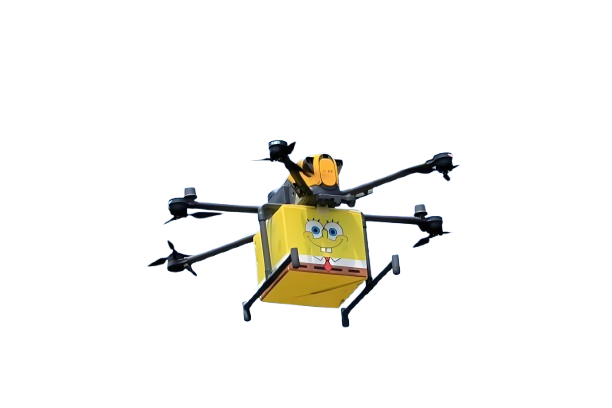
Logistics drones are rapidly expanding in industries such as medical transportation, warehouse distribution, offshore delivery, and emergency supply transport.
These UAVs require highly reliable propulsion systems because payload stability directly affects transportation safety. Motors used in logistics drones must provide:
Stable thrust output
High efficiency
Low vibration
Long endurance
Excellent thermal management
As drone delivery networks continue to grow worldwide, demand for high-performance heavy lift motors is also increasing rapidly.
Emergency rescue drones are increasingly used during natural disasters, urban fires, earthquakes, and search-and-rescue missions. These drones often carry:
Thermal imaging cameras
Rescue supplies
Communication systems
Fire extinguishing equipment
Medical kits
Because emergency operations may involve high temperatures, smoke, rain, or unstable weather conditions, motor durability and reliability become extremely important
Industrial surveying drones frequently carry heavy and expensive equipment such as:
LiDAR scanners
Multispectral cameras
High-resolution mapping systems
Industrial inspection sensors
These payloads require stable flight platforms with strong lifting power and precise motor control. Even slight vibration can affect mapping accuracy, making motor balance and efficiency extremely important.
The core of a heavy lift drone is its brushless outrunner motor system. Compared with small consumer drone motors, industrial UAV motors feature:
Larger stators
Stronger magnets
Higher copper fill rates
Larger bearings
Improved cooling structures
These features allow the motor to generate higher torque, which is necessary for spinning large propellers efficiently.
Heavy lift drones rely on large propellers to generate efficient airflow and lifting force.
The relationship between propeller size and thrust can be simplified as:
F∝D4×RPM2
This explains why heavy lift drones typically use large-diameter propellers operating at relatively low RPM. Larger propellers move more air efficiently, producing stronger lift with lower energy consumption.
Modern heavy lift drones commonly use:
12S battery systems
14S battery systems
18S battery systems
Higher voltage systems reduce current draw while improving overall efficiency. Lower current also reduces heat generation inside the motor and ESC, helping extend system lifespan and improve reliability during long-duration flights.
Motor KV is one of the most important factors when selecting a UAV motor.
| Motor Type | Typical Application |
|---|---|
| High KV | Racing drones |
| Low KV | Heavy lift drones |
Low KV motors provide:
Higher torque
Better efficiency
More stable thrust
Better compatibility with large propellers
This makes low KV brushless motors ideal for industrial UAV applications carrying heavy payloads.
Heavy lift UAV motors operate under continuous high-load conditions, which can generate significant heat. Without proper cooling, motors may suffer from:
Overheating
Reduced efficiency
Magnet demagnetization
Bearing damage
Shortened lifespan
Industrial UAV motors therefore often use:
CNC aluminum housingsCNC
Optimized airflow channels
High-temperature windings
Precision bearings
These features improve durability and allow stable operation during demanding missions.
A general rule for heavy lift drones is:
Total maximum thrust should be at least twice the aircraft takeoff weight.
For example:
If a drone weighs 25kg including payload, the propulsion system should ideally generate at least 50kg of total thrust for stable and safe flight performance.
Heavy lift drones typically use large motor sizes such as:
6215
8010
10015
12020
Larger motors generally provide:
Higher torque
Better cooling
Larger propeller compatibility
Greater payload capability
However, motor size must also match the aircraft structure and battery system.
Motor performance is directly related to propeller selection. Larger propellers improve lifting efficiency but also require stronger torque output.
Motor, ESC, battery voltage, and propeller size must all work together as a complete propulsion system.
Improper matching may cause:
Instability
Excessive vibration
Overheating
Reduced flight time
Motor failure
Industrial drones often operate in harsh outdoor environments. High-quality UAV motors should therefore include:
Waterproof protection
Dust resistance
Corrosion-resistant coatings
Long-life bearings
Stable winding insulation
Reliable motors reduce maintenance costs and improve operational safety.
Quadcopters use four motors and offer relatively simple structures, but they have limited redundancy for industrial heavy lift applications.
Hexacopters provide improved lifting capability and better flight stability. Even if one motor fails, the drone may still maintain limited control.
Many industrial heavy lift drones use octocopter designs because they provide:
Stronger lifting power
Better stability
Higher redundancy
Improved safety for valuable payloads
Octocopter systems are especially common in agriculture, logistics, and emergency rescue operations.
Heavy lift agricultural drones improve spraying efficiency while reducing labor intensity and chemical waste.
Applications include:
Crop spraying
Fertilizer spreading
Seed distribution
Precision agriculture
Heavy lift drones are increasingly used for inspecting:
Power lines
Pipelines
Wind turbines
Solar farms
Industrial facilities
These drones can carry advanced sensors and imaging systems for detailed inspections.
Cargo UAVs are becoming important tools for:
Medical transportation
Offshore delivery
Mountain logistics
Remote area supply transport
Heavy lift drones help reduce transportation time and improve accessibility.
Disaster response drones can rapidly deliver critical supplies and improve situational awareness during emergencies.
Typical missions include:
Firefighting support
Earthquake rescue
Flood response
Emergency communication deployment
The heavy lift drone industry is still developing rapidly, and UAV motor technology will continue evolving toward higher efficiency and greater intelligence.
Future trends include:
Higher efficiency brushless motors
Lightweight structural materials
Integrated propulsion systems
AI-based power management
Hybrid and hydrogen power systems
Longer endurance industrial UAVs
As industrial drone applications continue expanding, propulsion systems will remain one of the most important technologies driving UAV performance.
Heavy lift drones carrying 10kg–30kg payloads are transforming industries such as agriculture, logistics, surveying, construction, and emergency rescue. Their growing popularity is driven by advances in brushless motor technology, battery systems, intelligent flight control, and industrial automation demands.
Among all drone components, the UAV motor plays the most critical role in determining payload capacity, efficiency, stability, and operational safety. Selecting the correct motor requires careful consideration of thrust, KV rating, propeller compatibility, cooling capability, voltage systems, and long-term reliability.
As the industrial UAV market continues to expand, high-performance heavy lift motors will remain essential for improving flight efficiency and enabling increasingly advanced drone applications.
At BG Motor Official Website, we continue developing high-efficiency brushless UAV motors designed for demanding heavy lift drone applications, helping industrial customers achieve greater payload capability, improved endurance, and reliable flight performance in complex environments.
 what's app